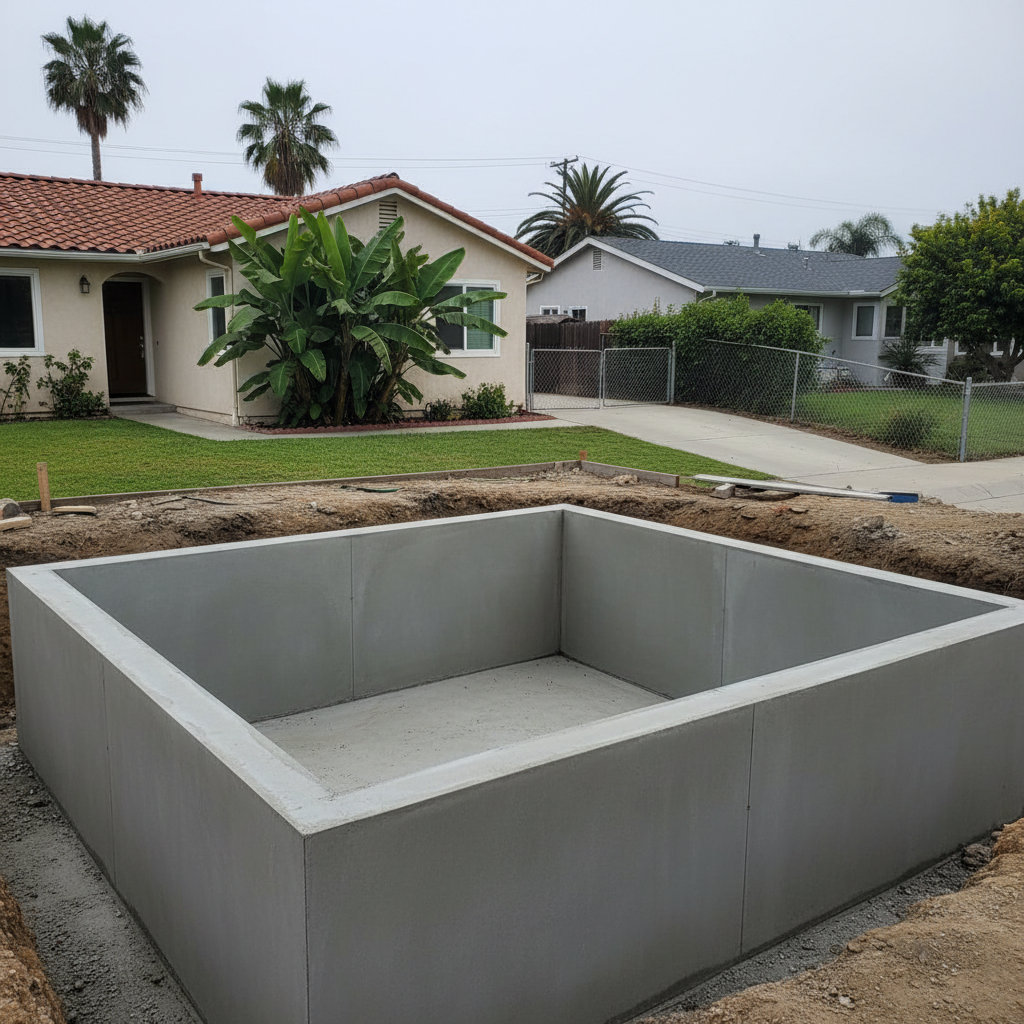
Concrete looks simple from the street. A gray slab, a few control joints, done. What you can't see is the four inches of compacted base rock under it, whether the rebar is tied or just dropped in loose, and whether the guy pouring it understands what Red River clay does to a driveway over ten years. Picking the wrong contractor in Bossier City doesn't usually show up as a disaster on day one. It shows up eighteen months later as a crack running corner to corner, or a slab that's pulled away from the garage threshold by half an inch.
Here's what actually separates a contractor worth hiring from one you'll be calling back to fix his own work.
Ask what's going under the slab, not just what's on top
Most of Bossier City and the parish sits on clay-heavy soil from the old Red River floodplain. That clay swells when it's wet and shrinks hard when it dries out, which is exactly the cycle we get between a wet spring and a dry August. If a contractor pours straight onto that native clay without at least 4 inches of crushed limestone base, compacted in lifts, you're setting the slab up to move with the ground underneath it. Ask directly: what's the base, how many inches, and is it compacted with a plate or just graded and tamped by hand. A contractor who hesitates on that question hasn't thought about it.
Same goes for reinforcement. Wire mesh is cheaper and it's fine for a lot of patios. For a driveway or anything carrying vehicle weight, rebar on chairs, usually #3 bar on a 2-foot grid, holds up better over time because it stays in the middle of the slab instead of sinking to the bottom during the pour, which is what mesh does if nobody lifts it. Ask which one they're using and why.
Control joints aren't optional, and timing matters
Concrete cracks. That's not a defect, that's the material. The job of control joints is to tell the slab where to crack instead of leaving it to guess. They need to be cut at roughly a quarter of the slab's depth, spaced no more than about 10 to 12 feet apart for a driveway, and cut within 24 to 48 hours of the pour depending on the weather. Wait too long in a Louisiana July and the slab has already decided where it wants to crack on its own, usually somewhere the joint wasn't planned. A contractor who saw-cuts the next morning, or at least talks about timing without you asking, has done this enough times to respect it.
Permits, inspections, and what the city actually checks
Inside Bossier City limits, a new driveway, slab foundation, or retaining wall over a certain height typically needs a permit through the city's building department, and work out in unincorporated Bossier Parish goes through the parish instead. The inspector is generally looking at the footing or base prep before concrete goes down, not after, so a contractor who pours before an inspection has either skipped the step or is betting you won't ask. For anything near a property line, especially retaining walls or a driveway that's being widened, a setback check matters too. Older streets in neighborhoods like Cedar Grove or around Bellaire were platted decades ago and property lines don't always match what a fence or an old slab implies. A contractor who's worked this area knows to flag that before pouring, not after the city red-tags it.
What to walk away from
A few things should end the conversation fast:
- A bid that's dramatically lower than everyone else's with no explanation. That gap is usually base rock, rebar, or concrete thickness getting cut somewhere you can't see once it's poured.
- Pressure to pay the full amount upfront, before any work starts. A deposit is normal. The full contract price up front is not.
- No written contract, just a handshake and a verbal number. Get the mix design, thickness, square footage, and timeline in writing.
- Someone who can't tell you the difference between a 3,000 PSI mix and a 4,000 PSI mix, or waves off the question. Driveways and anything exposed to vehicle weight should be at least 4,000 PSI here, partly because of the freeze-thaw swings we get most winters, even if it's only a handful of nights below freezing in a typical January.
- No insurance certificate available on request. If a crew member gets hurt on your property and the company isn't covered, that liability can land on you.
Weather, cure time, and why the schedule matters
North Louisiana humidity slows the finishing process in summer and speeds up surface drying in a way that can cause crazing if the crew doesn't manage it. A good contractor watches the forecast and won't pour right before a heavy spring rain, which we get plenty of between March and May. Fresh concrete needs about 24 to 48 hours before you can walk on it and closer to 7 days of cure before it should take vehicle weight, longer if temperatures stay cool. Full strength takes around 28 days. Anyone telling you to drive on a driveway the next day either doesn't know better or doesn't care.
Older homes around Bossier City, especially from the postwar growth years tied to Barksdale, often have shallow or undersized original slabs with no rebar at all. If you're resurfacing or replacing one of those, the new work has to be judged on its own, not matched to whatever corners got cut sixty years ago. Newer subdivisions out toward Haughton and Benton tend to have better-engineered pads to start with, but the clay underneath hasn't changed, so proper base prep still matters just as much.
Get two or three bids, ask the same specific questions of each one, and pay attention to who answers without flinching. That's usually the one who's actually poured concrete here for a living. If you want to see how we handle base prep, reinforcement, and joint layout on our own jobs, you can look through our concrete contractor work before you decide who gets the call.